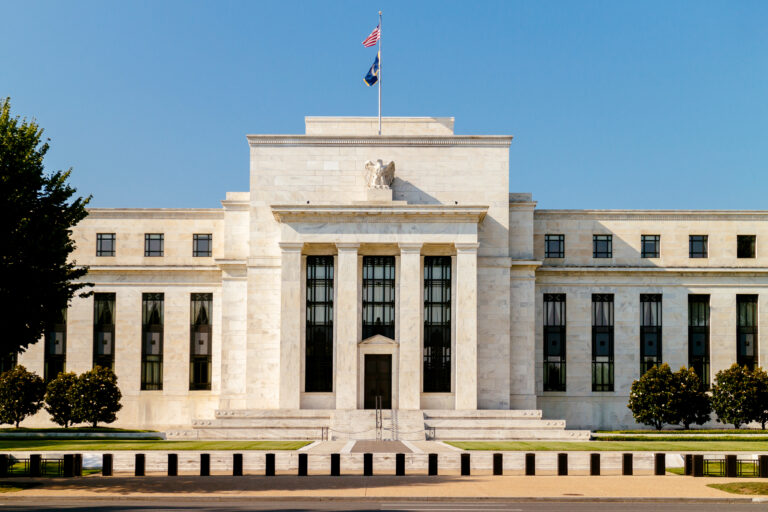
September 2025 Mid-Month Market Update
Another Disappointing Employment Report
The August jobs report was broadly disappointing, marking the second consecutive month of weaker-than-expected results:
- Payrolls: Nonfarm payrolls increased by just 22,000, well below the 75,000 consensus estimate.
- Revisions: June payrolls were revised down to –13,000, the first monthly decline since December 2020 (see chart).
- Job Creation: Only 598,000 jobs have been added year-to-date, the slowest pace for the first eight months of any year since 2009.
- Unemployment: The unemployment rate rose to 4.3%, the highest since October 2021. This was partly offset by a rise in the labor force participation rate to 62.3%, as 436,000 people reentered the labor force.
- Immigration/labor supply: The foreign-born labor force ticked up slightly in August, but has declined by 1.5 million since March.
- Long-Term Unemployment: The share of people unemployed for 27 weeks or more rose to 25.7%, the highest since February 2022.
- Labor Demand: For the first time since 2021, the number of unemployed Americans now exceeds the number of job openings (see chart).
The BLS preliminary benchmark revisions (covering April 2024–March 2025) suggested total payrolls were overstated by 911,000 jobs, further highlighting labor market softness. At the same time, weekly jobless claims climbed to 263,000, the highest since 2021. While the uptick in new claims is concerning, 60% of the increase came from Texas and may have been distorted by Labor Day timing effects rather than broad-based layoffs.
Overall, the data indicates that companies have largely paused hiring, setting the stage for the Fed to begin cutting rates at this Wednesday’s FOMC meeting. Looking ahead, markets are focused on whether the slowdown in job growth proves temporary—driven by tariff uncertainty—or signals a more fundamental weakening in the economic outlook.


Fed Set to End 9-Month Pause
For the first time in 2025, the Fed is widely expected to cut the federal funds rate at its September 17th FOMC meeting. Consensus calls for a 25 bp reduction, which would bring the target range down to 4.00%–4.25%. While a softening labor market is driving the decision, we believe that sticky inflation and resilient consumer spending are likely to prevent a larger 50 bp cut.
Attention will turn to the Summary of Economic Projections (SEP)—the Fed’s “dot plot.” At the June meeting, officials signaled an average of 50 bps of cuts by year-end 2025 and only an additional 25 bps of cuts by the end of 2026. The Committee was deeply divided, with 7 members projecting no cuts this year while 10 expected at least two 25 bp cuts. Given this split, adjustments to the dot plot are expected, though most changes will likely focus on the 2026 rate outlook rather than 2025.
As of September 15, 2025, Fed funds futures are pricing in a 100% probability of a rate cut at Wednesday’s meeting, a 96% probability that it will be a 25 bp move, and a total of 150 bps of easing through the end of 2026.

Treasury Yields Signal Aggressive Fed Cuts
Since August 1st, the 2-year Treasury yield has fallen more than 40 bps, extending its year-to-date decline to over 70 bps as markets price in a more aggressive Fed rate-cutting cycle. Risk assets have rallied during this period: investment grade, high yield, and ABS spreads have tightened this month, while equities reached fresh record highs, with the Dow Jones Industrial Average closing above 46,000 and the S&P 500 surpassing 6,600 for the first time.

Please click here for disclosure information: Our research is for personal, non-commercial use only. You may not copy, distribute or modify content contained on this Website without prior written authorization from Capital Advisors Group. By viewing this Website and/or downloading its content, you agree to the Terms of Use & Privacy Policy.