September 2025 Month-End Market Update
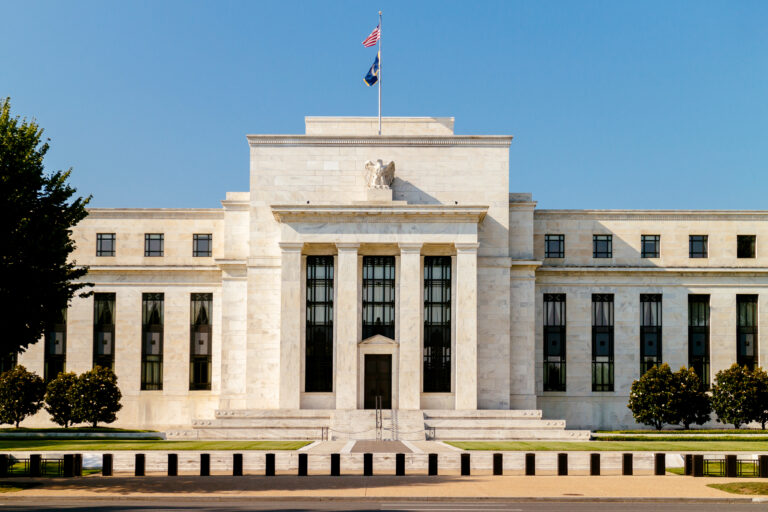
Government Shutdown: Economic & Market Implications
A stalemate over health care subsidies has triggered the first government shutdown in nearly seven years, affecting an estimated 750,000 federal employees. Historically, shutdowns tend to be either brief (lasting just 2–3 days) or stretch for several weeks.
From an economic and market perspective, the impact has generally been limited. Economists estimate that each week of a shutdown reduces GDP by roughly 0.1 percentage points, but most of these negative economic effects are reversed once the government reopens. Market performance has also shown little effect on average: over the past 20 shutdowns since 1976, the S&P 500 has been largely unchanged, while prolonged shutdowns have typically coincided with a decline in long-term Treasury yields.
One meaningful disruption for both markets and the Federal Reserve is the delay in key economic data releases, such as monthly employment and inflation reports, as well as weekly jobless claims.
Here is a link to a detailed write-up from our credit team: https://www.capitaladvisors.com/research/government-shutdown-continuing-to-be-a-resolute-headache/

Q2 Growth Revised Higher — Outlook Remains Solid
The third and final estimate for Q2 GDP was revised up to 3.8%, the strongest reading since 2023, driven by a 2.5% increase in personal consumption. Business investment also rose at a robust 7.3% pace, reflecting the largest spending on intellectual property projects since 1999.
On a year-over-year basis, GDP growth now stands at 2.1%, highlighting a rebound in the second quarter after Q1’s contraction, which stemmed from a surge in imports as companies stocked up ahead of tariffs. Given the volatility stemming from the trade war, economists have increasingly focused on private final domestic purchases (which exclude government spending and exports). That measure was revised up a full percentage point to 2.9%.
Looking ahead, momentum appears intact: the Atlanta Fed’s GDPNow model is currently forecasting Q3 growth of 3.9%.
Q3 2025 Performance Highlights
The third quarter saw a rally in both bonds and equities, supported by solid growth and resilient consumer spending, while the impact of tariffs proved less severe than feared. However, labor market weakness emerged as the dominant theme, paving the way for the Fed’s first rate cut since December 2024. Additional cuts are expected later this month and in December.
Q3 Highlights:
- Treasuries: Yields declined across the curve, led by the front end, with the 6-month T-bill rallying more than 41 bps to 3.84%. Please note that front-end yields typically do not reprice until the Fed adjusts monetary policy.
- Credit: Investment-grade and high-yield spreads tightened, with high-yield issuance particularly strong — marking the busiest third quarter since 2020.
- Equities: All three major indexes posted gains, led by the Nasdaq which surged more than +11%.
- Precious Metals: Gold prices climbed over +16% to a record high of $3,859/oz.
- Dollar: The dollar stabilized, rising +0.9% after its weakest first half since 1973.

Please click here for disclosure information: Our research is for personal, non-commercial use only. You may not copy, distribute or modify content contained on this Website without prior written authorization from Capital Advisors Group. By viewing this Website and/or downloading its content, you agree to the Terms of Use & Privacy Policy.