
The Rate Rise Nobody Can Quite Explain
Key Takeaways
- A strong U.S. economy may keep interest rates higher for longer.
- AI-driven borrowing may be adding pressure, but it doesn’t fully explain the Treasury sell-off.
- Expanding fiscal deficits are increasing uncertainty around long-term rates.
- For cash investors, higher rates may create opportunities, while short-duration strategies may help limit duration risk.
Introduction
One of the biggest concerns for investors right now may be the rise in interest rates.
The sell-off in long-term bonds dates back to 2021, but the recent reacceleration is catching market participants’ eye given the economic backdrop:
- Ongoing geopolitical tensions
- Energy price fluctuations
- Regime change at the Federal Reserve
- A deteriorating fiscal outlook
For investors, the implications may extend beyond the bond market. Higher long-term rates can affect borrowing costs, cash investment decisions, and liquidity management.
What’s Driving the Rise in Interest Rates?
In truth, it’s nearly impossible to disentangle the signal from the noise.
No one can be entirely sure why bonds have sold off to the extent they have. But there are several factors that may be contributing to the recent rise in interest rates and pressure on long-term bonds.
This list is not exhaustive, but a few key contributors come to mind.
- The U.S. Economy Is Running Hot
Broad consumer sentiment and economic data tell conflicting tales.
The general zeitgeist in the U.S. has been one of malaise, evidenced by the overall downward trend in consumer sentiment during the post-COVID decade. In contrast, broader economic data suggests the U.S. economy has been running hot for more or less the entirety of this period.
If the 2010s were defined by sluggish demand, low inflation, and low interest rates, the 2020s have been the inverse.
The data all point in this direction:
- Equity markets have been buoyant.
- Inflation has run above the Fed’s target for 5+ years consecutively.
- Unemployment has held below 5% for the same period.
A brief glance at the historical unemployment figures suggests that this is not the normal state of affairs.
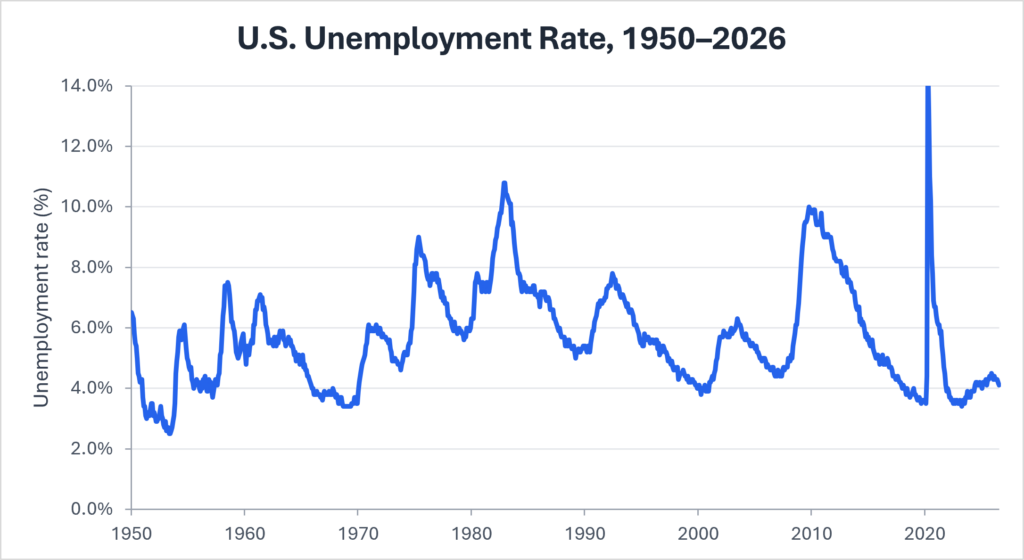
Figure 1: Bureau of Labor Statistics, FRED
A Stronger Economy Is Supporting Higher Rates
This may be neatly summed up by nominal growth figures.
Nominal gross domestic product (NGDP) is simply the dollar expenditure in the economy, reported without the usual disaggregation between the real (RGDP) and inflationary (GDP Deflator) components.
The difference between the two periods is notable:
- 2010-2019: NGDP growth averaged ~4% annually.
- Since 2023: NGDP growth has averaged ~5.5% annually, omitting 2020-2022 to exclude the rapid recovery from COVID
- Overall: That represents a pace nearly 40% faster than the 2010s.
That faster pace has pushed NGDP above most estimates of neutral, consistent with the “hot economy” thesis.

Figure 2: Mercatus Center, David Beckworth, https://www.mercatus.org/ngdp-gap
Why a Stronger Economy Can Push Rates Higher
What’s the linkage to interest rates?
Higher nominal growth may result in more income to service debt, more projects worth funding, and more competition for capital – all of which can put upwards pressure on interest rates.
It follows that a world of significantly higher nominal growth may contribute to interest rates settling at a higher level.
AI Debt May Be Adding Pressure – But Is It the Main Driver?
A much-cited explanation for the rise in interest rates is the AI buildout.
There’s a logical story here: a borrowing binge by traditionally frugal hyperscalers floods the market with investment-grade debt that “crowds out” (for lack of a better term) commensurate forms of debt, including U.S. Treasuries.
There may be some truth to this.
U.S corporate bond issuance is up 27% year-over-year, according to SIFMA, and growth in investment-grade issuance has far outpaced high-yield issuance.
Amazon, Alphabet, Meta, and Oracle alone issued roughly $194 billion in bonds through early July, up 79% from all of 2025.
Foreign investors, meanwhile, have increasingly directed net flows into corporate bonds rather than U.S. Treasuries, which hints at a shift in preference.
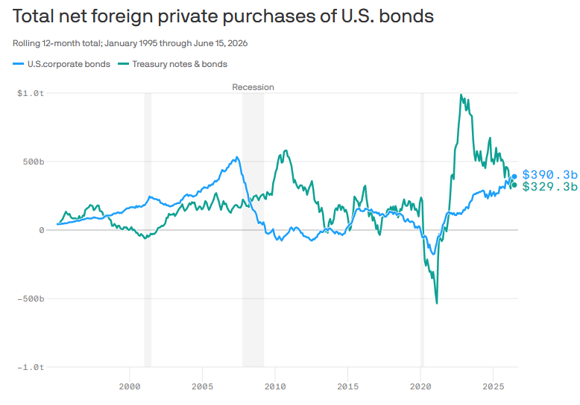
Figure 3: Axios, https://www.axios.com/2026/08/25/ai-debt-treasury-yields
Why AI Debt May Not Explain the Entire Treasury Sell-Off
But the story has holes.
The corporate bond market is still only about a third the size of the Treasury market:
- Corporate bonds: $11.7T outstanding
- U.S. Treasuries: $31.5T outstanding
It would likely take an exceptionally large surge in corporate supply to meaningfully move Treasury yields.
Moreover, despite the issuance boom, corporate debt-to-GDP has actually fallen over the past three years, from 49% to 45% as of Q1 2026, according to Federal Reserve data.
Over the same stretch, net government debt (ex-Fed holdings) to GDP rose from 91% to 98%.
So, while the AI buildout may be contributing to the Treasury sell-off at the margin, the magnitudes suggest it is likely anything more than a bit player.
Fiscal Deficits Are Putting Pressure on Long-Term Rates
The fiscal picture offers a more compelling explanation.
It’s common knowledge that the fiscal outlook in the U.S. is #notgood, to put it mildly. Federal debt recently crossed the $40 trillion mark, and the deficit is expanding.
The Congressional Budget Office (CBO) is tracking the fiscal 2026 deficit at $2.1T, up 16.7% from FY2025 and equivalent to 6.5% of GDP.
The Return of the Term Premium
Concerns about the fiscal outlook may help explain the return of the “term premium” – the additional return investors demand for the uncertainty of holding a long-term bond rather than a series of short-term bonds.
The term premium isn’t directly observable, but it can be estimated from macroeconomic and financial variables. Those estimates are rising.

Figure 4: Federal Reserve Bank of New York
Coincidentally, the Treasury “convenience yield” – or the premium investors have historically paid in exchange for Treasuries’ safety and liquidity – has collapsed.
AAA-rated corporate bonds now often trade at yields below comparable Treasuries, an unusual development given the traditional safety and liquidity premium associated with U.S. government debt.

Figure 5: Hanno Lustig, https://thetwocents.substack.com/p/what-are-us-treasury-markets-telling?mod=djemintinvestor
It would be hyperbolic to call this a sign of an imminent fiscal crisis. It’s worth noting, however, that this coincides with an untethering of the deficit from the economic outlook.
Why Deficit Spending Matters When the Economy Is Strong
Traditional macroeconomics posits that fiscal policy should be countercyclical. When the economy is struggling due to weak private-sector demand, government spending typically increases to fill the gap. When times are good, the government cuts back its spending and restores its balance sheet.
The logic is simple and elegant.
This iteration of deficit spending runs counter to that.
The economy is operating at or above potential, unemployment is low, and yet the federal deficit is expanding rather than contracting.
Rising Interest Rates Add to Fiscal Pressure
The fiscal math only worsens as interest rates rise.
The Treasury is attempting to intervene with its own version of an “Operation-Twist”, buying back long-term debt through a combination of bill issuance and utilization of the Treasury General Account (TGA).
But while this may provide some marginal support to long-term bonds, it does not address the underlying drivers of the federal deficit.
At some point, the “bill” for fiscal profligacy will come due.
What Higher Interest Rates May Mean for Cash Investors
For cash investors, we believe these developments are, on net, a positive.
Higher long-term rates signal that the market expects short-term interest rates to be higher, on average, over the next 5, 10, and 30 years. This raises the expected return of cash portfolios over a long-term horizon.
Cash Investors May Limit Duration Risk
Cash investors don’t capture the term premium, but they limit duration risk. This may well prove an important advantage given the potential threats that inflation, fiscal concerns, and AI-related investment may pose to long-term bonds.
They may also benefit at the margin from any rise in short-term rates driven by Treasury’s shift toward bill issuance.
Stated differently, in a rising rate environment, cash investors holding Treasuries to maturity may benefit from higher interest income while limiting the risk of realizing mark-to-market losses.
The Bottom Line for Cash Investors
For the time being, then, cash investors may be in a good spot.
It pays to follow the news, but stay the course.
Please click here for disclosure information: Our research is for personal, non-commercial use only. You may not copy, distribute or modify content contained on this Website without prior written authorization from Capital Advisors Group. By viewing this Website and/or downloading its content, you agree to the Terms of Use & Privacy Policy.