August Mid-Month Market Update
Softer Data Makes a Fed Rate Hike Less Urgent
Economic data released this month increasingly supports the Fed remaining on hold, with weaker labor market and consumer spending data accompanied by a second consecutive month of relatively benign inflation readings:
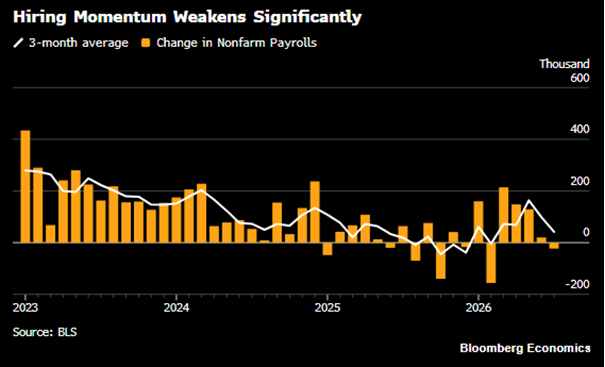
- Employment: The July nonfarm payrolls report surprised significantly to the downside, with employment declining by 23,000 versus expectations for a gain of 80,000. The prior two months were also revised lower by a combined 103,000 jobs. Although the unemployment rate declined to 4.1%, the improvement was not necessarily encouraging, as the labor force participation rate fell to its lowest level since the 1970s.
- Inflation: July inflation data remained favorable. Headline and Core CPI increased just 0.1% and 0.2%, respectively, in line with expectations, while year-over-year Core CPI declined to a five-year low of 2.5%. The three-month annualized pace of Core CPI (1.6%) also fell to its lowest level in two years. The Producer Price Index (PPI) provided another welcome surprise, with headline PPI unchanged in July versus expectations for a 0.2% increase.
- Retail Sales: July retail sales were weaker than expected across all major measures. Headline retail sales declined 0.6%, the largest monthly decline since May 2025, while the Control Group, which feeds into GDP, fell 0.4%, its weakest reading since January 2025. Five of the 13 categories posted declines, led by a 2.2% drop in online retailers and a 1.8% decline in auto sales. The weakness in online sales may prove temporary, however, as Amazon Prime Day occurred in June rather than July this year. One bright spot was restaurants and bars, the report’s only services category, which increased 0.5%.

Fed Funds Futures Pare Back Rate Hike Expectations
As of August 14th, the Fed funds futures market has pushed out expectations for a potential rate hike from September 2026 to January 2027 (see chart below). The shift reflects the recent softer economic data discussed above, along with a decline in oil prices that has eased near-term inflation concerns.
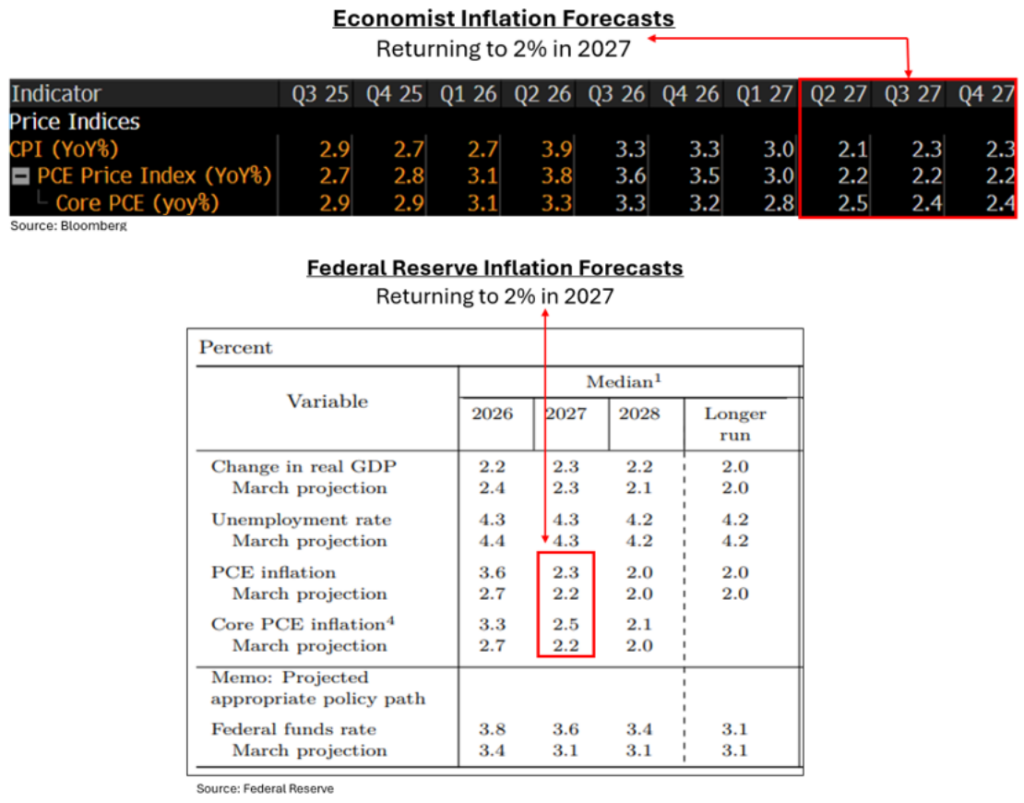
Meanwhile, both market-based and Fed inflation projections point to inflation moving closer to the Fed’s 2% target in 2027 (see chart below). Despite the recent hawkish rhetoric from some Fed officials and futures contracts that point to high odds of hikes over the next couple of quarters, the consensus among economists and market participants remains that the Fed is unlikely to raise rates, with the next policy move more likely to be a rate cut in 2027.

Lower Front-End Yields, Strong Risk Asset Performance
- The 2-year Treasury yield, the tenor most sensitive to monetary policy expectations, has declined 12 basis points in August as markets have repriced the outlook for Fed policy (see chart below). Risk assets have performed well, with the Nasdaq up more than 5% and the S&P 500 gaining approximately 4% in August, led by another quarter of solid earnings. Credit markets have remained resilient, with investment-grade spreads little changed, while the Bloomberg High Yield Index has followed the strength in equities, with spreads tightening more than 12 basis points.
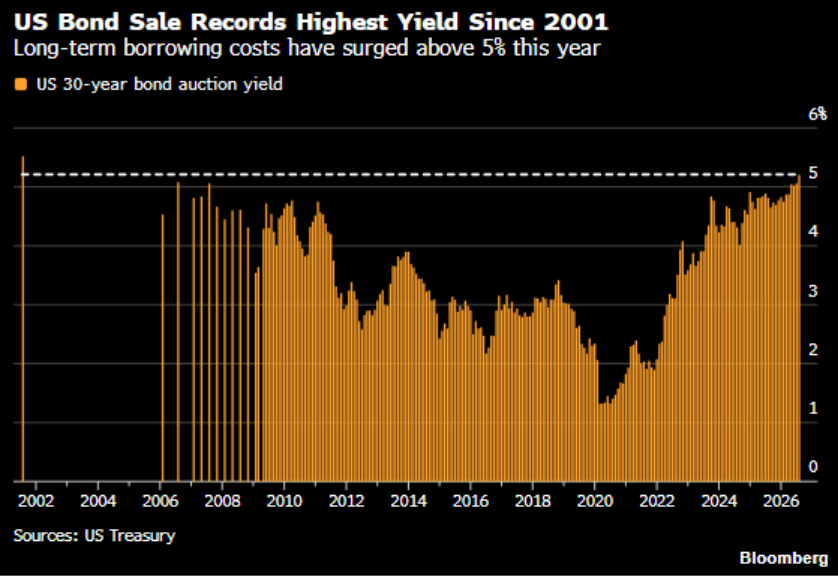
- Despite the decline in Treasury yields across much of the curve, longer-term yields remain elevated. The U.S. Treasury issued a 30-year Treasury bond at a 5.216% yield, the highest level in a quarter century (see chart below). The latest 10-year Treasury issuance also came at its highest yield since 2007. Persistent inflation concerns, coupled with growing federal deficits and increased Treasury issuance, continue to put upward pressure on longer-term yields.

Please click here for disclosure information: Our research is for personal, non-commercial use only. You may not copy, distribute or modify content contained on this Website without prior written authorization from Capital Advisors Group. By viewing this Website and/or downloading its content, you agree to the Terms of Use & Privacy Policy.