July Month-End Market Update
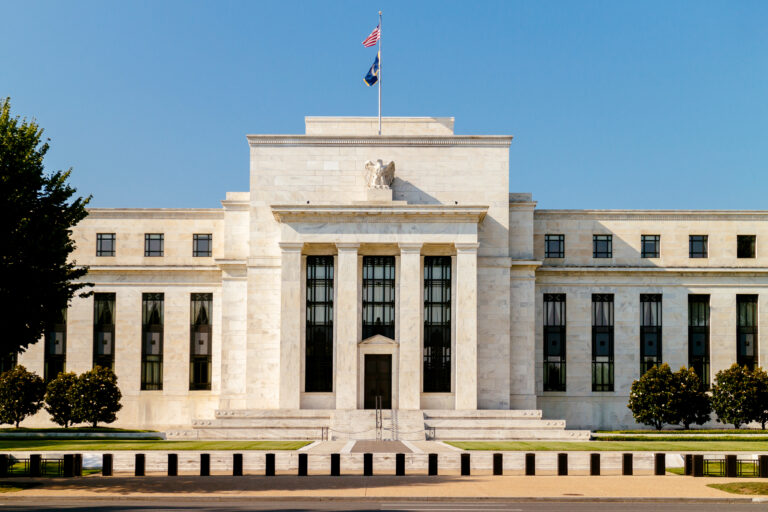
FOMC Update: Warsh Signals Patience
At its July meeting, the Federal Open Market Committee (FOMC) voted 9-3 to leave the federal funds rate unchanged at 3.50% to 3.75%. The three dissenting members—Dallas Fed President Lorie Logan, Cleveland Fed President Beth Hammack, and Minneapolis Fed President Neel Kashkari—favored raising rates by 25 basis points. The official policy statement was largely unchanged from June, with Chairman Warsh reiterating the Committee’s commitment to returning inflation to target while stopping short of signaling that rate hikes are imminent.
Several themes emerged from Warsh’s press conference:
- Higher market rates reduce the urgency for Fed action: When asked repeatedly why the Committee did not raise rates despite inflation remaining above target, Warsh responded that “rates are higher today” than they were at the June meeting, suggesting that higher Treasury yields have contributed to tighter financial conditions. Warsh implied that higher bond yields reduce the need to hike rates to tame inflation.
- Patience remains the preferred approach: Warsh emphasized that bringing inflation back to the Fed’s objective will take time, noting, “We’ve got no magic wand. This isn’t something we’re going to be able to carry out in days or weeks.” He added that the FOMC remains committed to fulfilling its congressional mandate but acknowledged that the inflation process will require a measured and disciplined approach.
- A broader view of inflation: Warsh also indicated that he is not solely focused on traditional inflation measures such as CPI and PCE. While noting that those reports remain important, he emphasized that his assessment incorporates a broader range of economic indicators when evaluating underlying inflation trends.
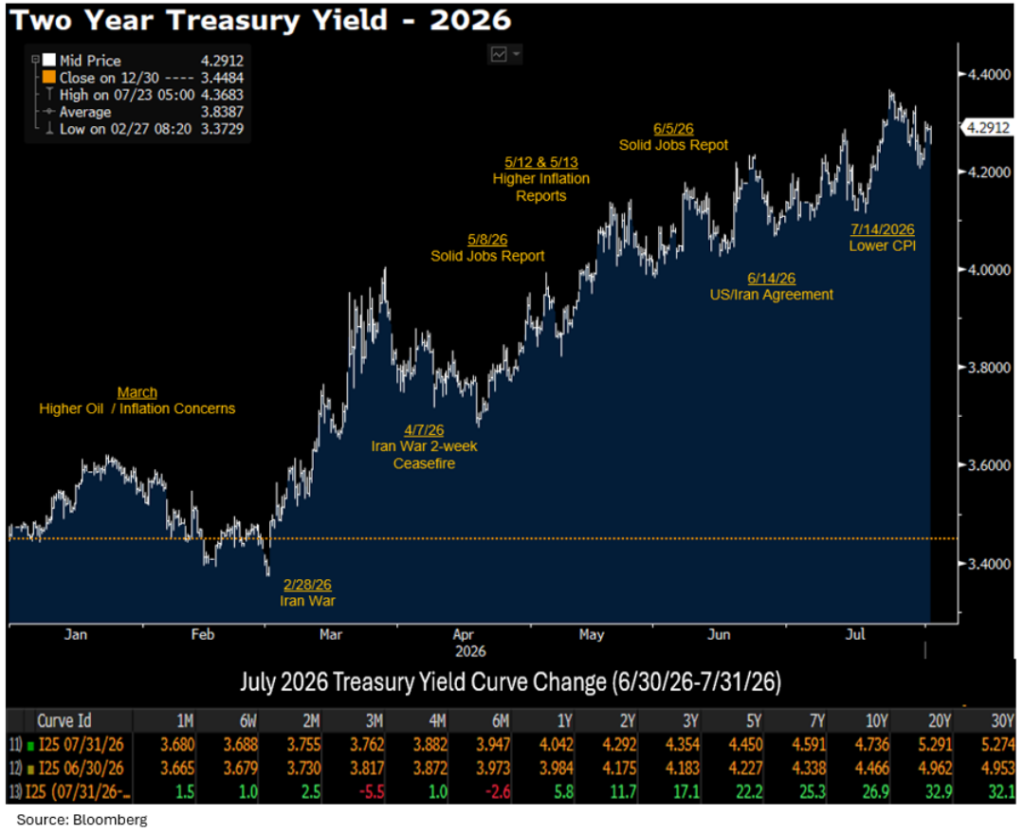
Treasury yields were mixed following the meeting. Front-end yields moved lower as investors interpreted Warsh’s comments to indicate that financial conditions resulting from higher market rates could substitute for additional Fed tightening. Longer-term Treasury yields, however, continued to move higher as investors weighed persistent inflation risks against a backdrop of resilient economic growth (see chart below).

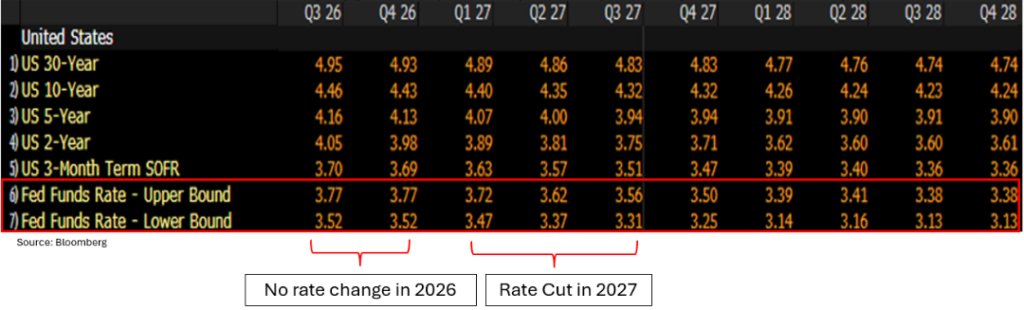
Despite the hawkish tone from several FOMC participants, uncertainty remains over the Fed’s next policy move. As of July 31, the fed funds futures market was pricing approximately a 60% probability of a 25-basis-point rate hike at the September meeting. In contrast, a late-July survey of economists continued to point toward a different outcome, with the consensus expecting the Fed to remain on hold for the rest of 2026 before beginning to lower rates in 2027 (see chart below).
Solid Q2 GDP Despite Headline Miss
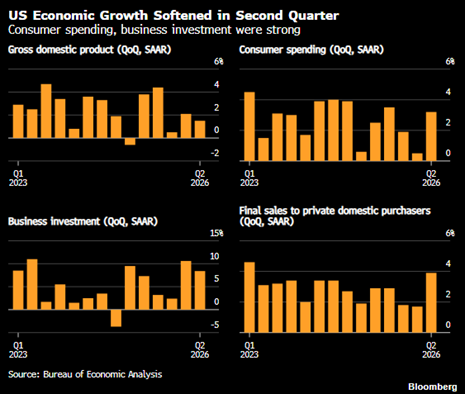
Second-quarter GDP rose 1.5%, below the 2.0% consensus forecast. However, the softer headline reading largely reflected higher imports and lower inventories—two components that often reverse in subsequent quarters. The underlying details were considerably stronger. Final Sales to Private Domestic Purchasers, the Fed’s preferred measure of underlying demand, rose 3.9%, the strongest pace in three years. Consumer spending remained resilient at 3.2%, while business investment continued to be supported by AI-related spending, with data center investment increasing 15.2% and transportation equipment investment rising 29.2%.
Core PCE Eases, Fed Holds
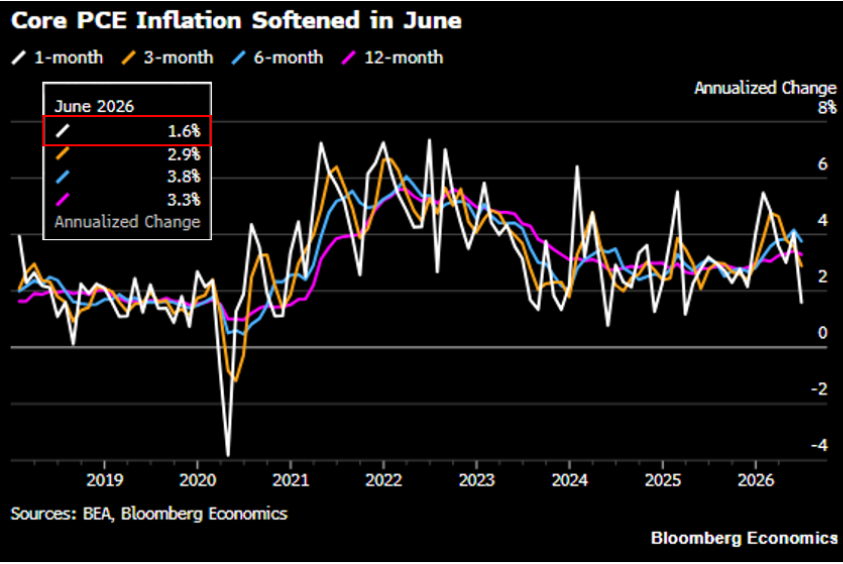
The Fed’s preferred inflation measure, Core Personal Consumption Expenditures (PCE), came in below expectations, rising just 0.1% in June, while headline PCE declined 0.1%, in line with forecasts. The softer-than-expected readings support the view of those FOMC members advocating for keeping policy rates unchanged through 2026.
On a year-over-year basis, inflation remained elevated but continued to improve. Headline PCE declined below 4.0% to 3.7%, while Core PCE eased to 3.3%. Notably, Core PCE remains well above Core CPI, which stands at 2.6% and is expected to decline further in the coming months, potentially to 2.3% or lower, as favorable base effects begin to weigh on the annual comparisons.
July Markets: Geopolitics Drive Inflation Concerns
July was marked by several market-moving developments, most notably the renewed escalation of the conflict between the U.S. and Iran, which pushed Brent crude oil prices more than 23% higher. Rising energy prices renewed inflation concerns in the bond market, driving the 30-year Treasury yield to 5.27%, its highest level since 2007.
Equity market performance was mixed. The Nasdaq declined more than 3% as AI and semiconductor stocks came under pressure from increased Chinese competition and ongoing supply constraints, while the Dow Jones and S&P 500 were little changed, returning +0.38% and -0.06%, respectively. Credit markets remained resilient despite the geopolitical backdrop, with front-end investment-grade spreads, as measured by the Bloomberg Short-Term and 1–3 Year Credit Indexes, ending the month little changed.
Please click here for disclosure information: Our research is for personal, non-commercial use only. You may not copy, distribute or modify content contained on this Website without prior written authorization from Capital Advisors Group. By viewing this Website and/or downloading its content, you agree to the Terms of Use & Privacy Policy.