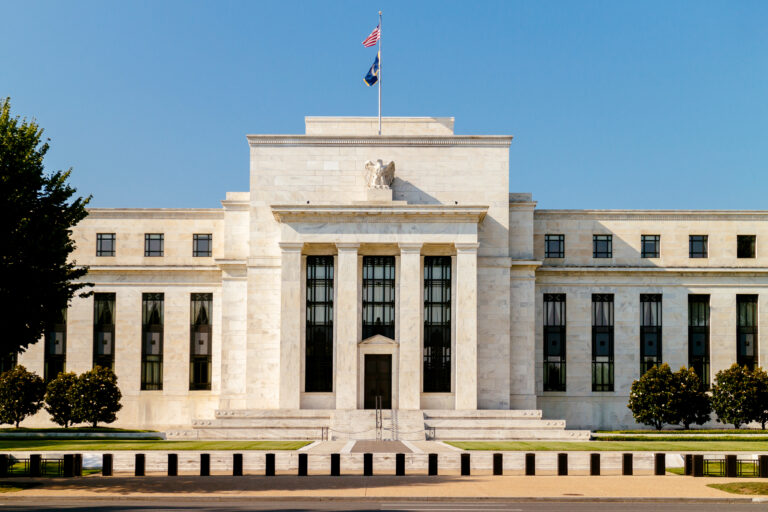
August 2025 Mid-Month Market Update
Fed Déjà Vu
This August is starting to feel like déjà vu. In July 2024, a weak employment report was followed just weeks later by Fed Chair Powell’s Jackson Hole remarks, where he signaled that “the time has come for policy to adjust.” At the very next FOMC meeting in September 2024, the Fed cut rates for the first time since the pandemic.
Fast forward to July 2025: another disappointing jobs report, and fed funds future markets are now pricing in over an 80% probability of a 25-basis-point cut at the FOMC’s September 17th meeting. Powell is scheduled to speak this Friday, August 22nd, at Jackson Hole, and some market participants are noting the striking parallels to last year.
Still, divisions remain within the FOMC (see commentary below). Powell is expected to walk a careful line—acknowledging that inflation is still above target while the labor market remains near full employment—but simultaneously laying the groundwork for a potential September rate cut. With key data releases still to come, he will likely preserve flexibility to adjust course if conditions do not warrant a move.

Mixed Inflation and Strong Retail Sales Complicate the Outlook
Since the disappointing July employment report, incoming data has not provided a clear case for a near-term policy shift and will likely keep FOMC members divided.
- Consumer Price Index (CPI): July’s headline and core CPI readings were in line with expectations. Core CPI rose 0.3% on the month—the fastest pace since January—though tariffs were not a driver of the increase. On a year-over-year basis, core CPI edged back above 3.0% to 3.1%.
- Producer Price Index (PPI): July’s PPI readings surprised sharply to the upside, with both headline and core PPI rising 0.9%—the largest monthly gain in three years. The spike has led some market participants to question whether higher producer prices could soon filter through to consumers.
- Retail Sales: It was a mixed report with the headline reading coming in slightly below expectations, but the Control Group (which feeds directly into GDP) beat forecasts and prior months’ readings saw large upward revisions. The Control Group’s 3-month average annualized pace climbed to 4.4% from 3.9%, the highest in three months. Underlying details showed strength in auto sales and online retail—likely supported by back-to-school shopping. However, eating and drinking establishments posted their second decline in three months, a trend economists watch closely since dining out is often one of the first areas households cut back on in a weakening economy. Overall, consumer spending began Q3 on a solid footing.


August Sees a Broad Decline in Treasury Yields
With the exception of the 30-year Treasury, yields moved lower across the curve in August, led by the 2-year as markets priced in potential rate cuts beginning in September. The 2-year, the most policy-sensitive maturity, fell more than 20 basis points to 3.75%. Risk assets continued to perform strongly: both the S&P 500 and Nasdaq hit record highs this month, while the Bloomberg Investment Grade Credit Index tightened to its lowest level since 1998.


Please click here for disclosure information: Our research is for personal, non-commercial use only. You may not copy, distribute or modify content contained on this Website without prior written authorization from Capital Advisors Group. By viewing this Website and/or downloading its content, you agree to the Terms of Use & Privacy Policy.