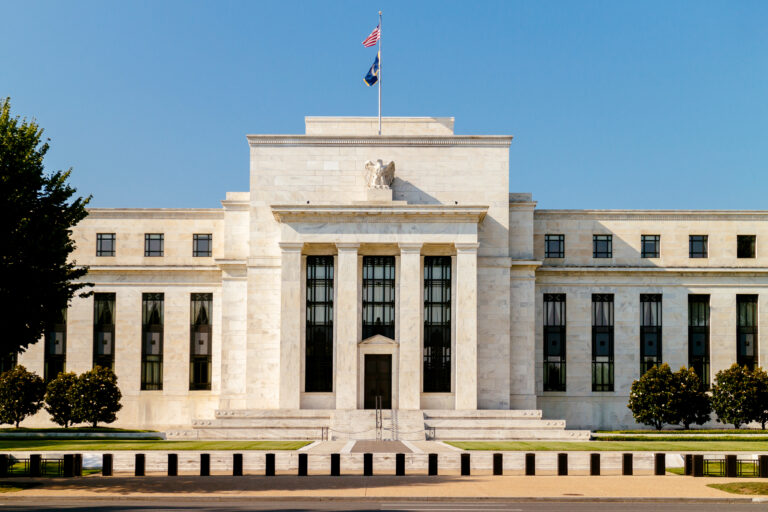
As widely expected, the Federal Open Market Committee left the federal funds target range unchanged at 3.50%–3.75%. Key takeaways from the meeting are outlined below:
The June FOMC statement was significantly shortened, shrinking from 341 words in April to just 130 words, reflecting Chairman Warsh’s stated goal of making Fed communications shorter, simpler, and more focused on the facts (see statement below).
Consistent with our mid-month update, the Committee removed its easing bias and eliminated forward guidance, signaling a greater reliance on incoming economic data rather than pre-committing to a future policy path.
The Committee characterized the economy as expanding at a solid pace, highlighting strong productivity growth and capital investment—a likely reference to ongoing AI-related spending. At the same time, it offered a more measured assessment of the labor market, noting that “job gains have kept pace with the workforce,” while acknowledging that inflation has been pressured higher in part by energy-related supply shocks.
The statement concluded with the declaration that “The Committee will deliver price stability,” underscoring a heightened focus on the inflation side of the Fed’s dual mandate amid a labor market that remains broadly stable.
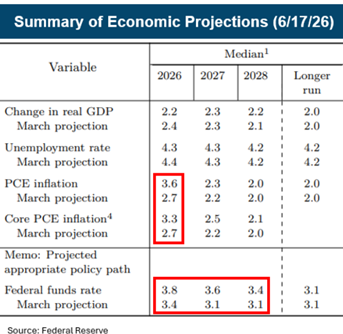
Summary of Economic Projections
The median federal funds rate projection now implies one 25 basis point rate hike by the end of 2026, followed by 25 basis point rate cuts in both 2027 and 2028.
FOMC participants significantly raised their inflation forecasts for 2026, with headline PCE inflation increasing from 2.7% to 3.7% and Core PCE inflation rising from 2.7% to 3.3%. Despite the upward revisions, both measures are projected to fall below 3% in 2027 as inflationary pressures gradually moderate.
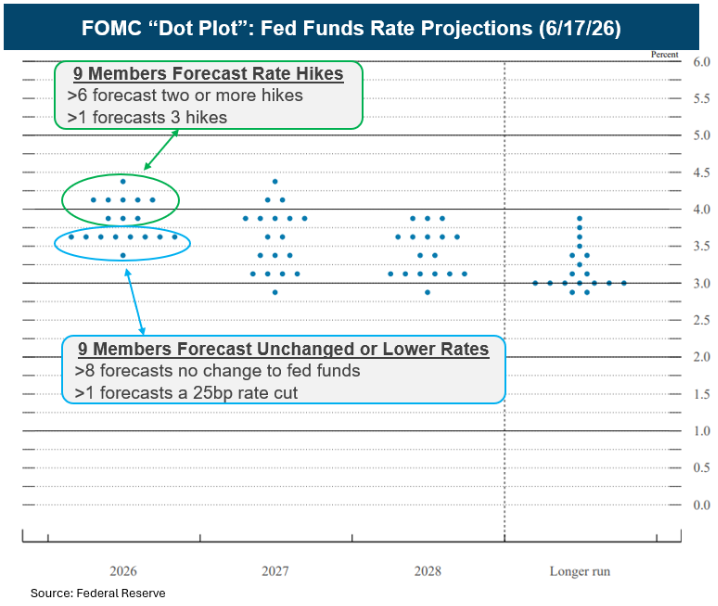
The dot plot revealed a divided Committee, with 9 participants projecting additional rate hikes and 9 participants expecting rates to remain unchanged or move lower. Notably, one participant did not submit a rate projection; Chairman Warsh later confirmed during the press conference that he was the non-participant, consistent with his long-standing reservations about the current structure of the Summary of Economic Projections.
Warsh Press Conference
In his opening remarks, Chairman Warsh delivered a strong message on inflation, noting that inflation has remained above the Fed’s 2% target for more than five years and emphasizing that the Committee is “unambiguous and unanimous” in its commitment to restoring price stability.
Warsh addressed the streamlined FOMC statement and the removal of forward guidance, which implies greater emphasis on incoming economic data rather than pre-committing to a future policy path.
He announced the creation of 5 task forces: Fed communications; Fed’s balance sheet policy; use and reliance on existing data sources; productivity and jobs in an era of transformation; and Fed’s inflation frameworks.
Consistent with his past criticisms of the Summary of Economic Projections (SEP), Warsh declined to submit his own dot plot and economic forecasts. However, he encouraged other FOMC participants to continue providing projections while noting that the communications task force will evaluate potential reforms to the SEP process.
When asked whether a rate cut was discussed during the meeting, Warsh acknowledged that there was one proposal on the table that was quite limited and “the group was unanimous and unambiguous” in rejecting it. One unanswered question is whether Warsh himself was the official who raised the proposal.
Warsh appeared to downplay the significance of the rate hike projections embedded in the dot plot, stating, “I didn’t hear a ton of conviction. What I heard was the kind of humility that I think we should have,” suggesting considerable uncertainty around the policy outlook.
Throughout the press conference, Warsh repeatedly highlighted the robust debate occurring within the Committee, referring to occasional “family fights” over policy issues while emphasizing that rigorous discussion and differing viewpoints ultimately strengthen the policymaking process.
Market Reaction
Treasury yields moved higher across the curve following the FOMC meeting, led by the 1- to 3-year sector as investors repriced expectations for a more restrictive policy path. In contrast, the long end remained relatively well anchored, with 20-year and 30-year Treasury yields little changed (see chart below).
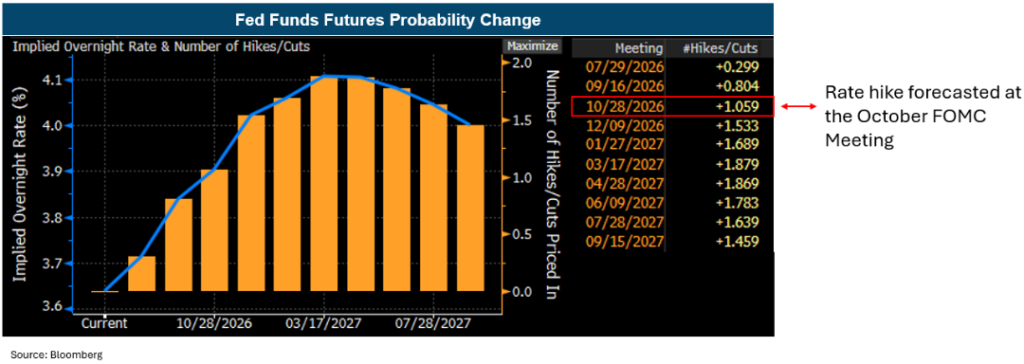
Fed funds futures shifted notably following the meeting and are now pricing in a 25 basis point rate hike at the October 28th FOMC meeting. The move reflects the market’s interpretation of the Fed’s more hawkish inflation outlook and Chairman Warsh’s strong emphasis on restoring price stability (see chart below).
Please click here for disclosure information: Our research is for personal, non-commercial use only. You may not copy, distribute or modify content contained on this Website without prior written authorization from Capital Advisors Group. By viewing this Website and/or downloading its content, you agree to the Terms of Use & Privacy Policy.
8 min read8 min read Key Takeaways Introduction One of the biggest concerns for investors right now may be the rise in interest rates. The sell-off in long-term bonds dates back to 2021, but the recent reacceleration is catching market participants’ eye given the economic backdrop: For investors, the implications may extend beyond the bond market. Higher…
6 min read6 min read Warsh Signals Hawkish Bias At the Jackson Hole Symposium, Fed Chair Kevin Warsh reiterated themes from his recent FOMC press conferences, emphasizing that inflation remains the Fed’s primary focus. He also used the speech to clarify several issues raised at the July FOMC meeting that had generated questions among market participants, addressing…
4 min read4 min read Softer Data Makes a Fed Rate Hike Less Urgent Economic data released this month increasingly supports the Fed remaining on hold, with weaker labor market and consumer spending data accompanied by a second consecutive month of relatively benign inflation readings: Fed Funds Futures Pare Back Rate Hike Expectations As of August 14th, the…
5 min read5 min read FOMC Update: Warsh Signals Patience At its July meeting, the Federal Open Market Committee (FOMC) voted 9-3 to leave the federal funds rate unchanged at 3.50% to 3.75%. The three dissenting members—Dallas Fed President Lorie Logan, Cleveland Fed President Beth Hammack, and Minneapolis Fed President Neel Kashkari—favored raising rates by 25 basis…
17 min read17 min read Key Takeaways If you’ve read the headlines lately, you might think the American consumer is finally buckling. In late May, The Wall Street Journal reported that the share of credit card balances at least 90 days past due climbed to 13.12% in the first quarter – the highest level since the aftermath…
7 min read7 min read Job Growth in June | AI Impact Limited The June employment report pointed to a labor market that continues to demonstrate resilience. Nonfarm payrolls increased by 172,000, while the three-month average payroll gain rose to 188,000, the strongest pace since 2024. The unemployment rate remained unchanged at 4.3%, although on an unrounded basis…